POTUS at RTP on STEM

Obama was at Research Triangle Park in Durham, NC yesterday to push for more engineering graduates.  He announced a plan to train 10,000 new math & science teachers as part of a $250 million effort to bolster STEM (science, technology, engineering, & math) education:
Today, only 14 percent of all undergraduate students enroll in what we call the STEM subjects – science, technology, engineering and math...We can do better than that. We must do better than that. If we’re going to make sure the good jobs of tomorrow stay in America, stay here in North Carolina, we need to make sure all our companies have a steady stream of skilled workers to draw from.
Several points deserve to be made here.
Ihe initiative appears to focus largely on science & math.  While it's hard to argue against more science & math teachers, I keep wondering about the technology and engineering parts.


It's a question worth pondering: How do we get teenagers interested in pursuing engineering degrees, or better yet, in becoming full-fledged, awesome engineers?


The Dean of NC State's engineering school says only half the students who start an engineering degree actually graduate with one.  I'm part of the other half.  I got bored after a semester of engineering school and dropped out.


The problem was that engineering, which used to involve hands-on technical problem solving, has come to mean, basically, applied mathematics.  Engineering students, in my experience, are taught much more about how to calculate things than they are about how things are made.   (There are exceptions, I'm told, including Olin and WPI.)
For a couple semesters as an undergraduate, I worked in the machine shop of an engineering school.  It was a boring job — the shop sat unused virtually all the time.


As Matt Crawford explains in his book Shop Class as Soulcraft, shop classes started disappearing from U.S. high schools around the time computers started appearing.  Computers were the keys to the jobs of the future; shop class was the dirty, blue-collar past.  No one ever cut off a thumb typing on a keyboard.  Shop classes were easy targets for cuts.  Now shop classes survive in some schools, mostly in rural areas, and always under names like "Technology Ed" or "Career and Technical Ed."


I suspect the dropoff in post-secondary engineering enrollment correlates with the disappearance of high school shop classes.  A good shop teacher with a well-equipped shop can probably influence more students to go into engineering than any math or science teacher.  Math and science are great, but they never inspired me to learn the finer points of engineering the way my welding teacher has.


I'm an Obama fan, but, as with many public figures, it's hard to tell sometimes if he sees his forest for his own trees.  Here's a line from his inauguration address, which I blogged about two years ago:
[I]t has been the risk-takers, the doers, the makers of things  some celebrated but more often men and women obscure in their labor — who have carried us up the long, rugged path towards prosperity and freedom.
That sounds like someone who understands the boots-on-the-ground reality: that innovation usually involves getting your hands dirty.  Let's train engineers and innovators who know how to do that.

What can Donald Rumsfeld teach us about prototype development?

I occasionally work with a student-led group working on an innovative building project.  The project involves building a small home on top of a custom steel trailer frame.  Recently the trailer frame manufacturer delivered the first of several trailer frames, and word came around that the frame was out of square by about 9/16".

While not a total disaster, it is not a fixable problem; the frame is too stout and too large to attempt straightening it.  The problem with an out-of-square frame is that the rest of the house must be built on top of the frame, and it's important that the house itself be square.  Building a square house on a non-square frame is definitely doable, but it would've been significantly easier had the trailer frame been squarer.

I made some inquiries as to how the error occurred.  Apparently, in drawing up the specification for the trailer frame, the team had simply not thought to specify a squareness.  It would've taken seconds to add that specification.  Doing so might have avoided many hours of re-design or re-work.  Whoever wrote up the specification seems to have done a fine job otherwise.  They simply didn't think of specifying a squareness.  It was an unknown unknown.

Call it the Donald Rumsfeld problem.  As Rummy famously said in discussing WMDs in Iraq,
[T]here are known knowns; there are things we know we know.
We also know there are known unknowns; that is to say we know there are some things we do not know.
But there are also unknown unknowns – the ones we don't know we don't know.

In WMDs and in developing prototypes, even just one unknown unknown can be a doozy.

The trick with prototype development is to maximize the known knowns and minimize the unknown unknowns.  Easier said than done.  Every time I go through the process, I get a little better at spotting the unknowns.

In my current capacity as Resident Metalworking Geek, I'm sometimes approached by colleagues and students about building things.  The first conversation is often an interesting one.  Often the "client" is thinking of all the exciting possibilities, while I'm simultaneously trying to anticipate everything that might go wrong.  I'm not trying to crush dreams (although it probably feels that way); I'm trying to keep the dream alive long-term by anticipating the unknowns.

Summary of Fluxes and Fillers for Brass and Silver Brazing

I compiled the following for my welding teacher here in Boone, NC, Steve Ward.  Steve's taught me a lot about all kinds of welding & fabrication.  He teaches a little brazing with flux-coated low-fuming bronze rods.  He's the kind of guy who's always looking for the best tools and supplies, so I compiled this summary of the brazing supplies I've used and heard of, so he can order some of the really nice stuff in the future.

These are but the humble opinions of one brazing nerd.  Please comment freely.
--

Brass brazing flux:
- The blue flux I have is Gasflux brand Type B.  Excellent stuff.  I have bought small quantities (1-2 lbs) in the past year+ directly from Gasflux, but was told during my last order that that would no longer be possible and that I should order from an Airgas dealer in the future.  Details here: http://www.gasflux.com/paste.html
- If that's not an option, there is some even more obscure stuff called Brazage LFB Light flux, produced and sold by a bike framebuilding old-timer, Freddy Parr.  Freddy's stuff is well-regarded by some of the big names in the bike building world.  I've not used it, but I expect it is superb, based on his silver flux:  http://www.cycledesignusa.com/lfblight.htm

Brass brazing fillers:
I like 3/32" diameter best but 1/16" is fine for many things, and gives you more rods per lb.
- The stuff I like best if Gasflux C-04 nickel bronze.  This stuff flows much better than anything I've ever used, especially on stainless.  $9/lb for my last order, which was over a year ago.  Again, I've bought 1 or 2 lb quantities from Gasflux directly, but was directed to Airgas last time.  http://www.gasflux.com/brazing.html
- All-State 11 nickel silver.  I've used several pounds of this, unfortunately in 18" lengths.  They were samples that sat in the back room of a welding store in Richmond for years until I called up asking about brazing rod and someone offered me them for free.  They were flux-coated but the flux was stale so I soaked most of it off.  Very strong stuff, 85 kpsi, but a little less fluid than low-fuming bronze, and harder to file/machine post-braze. Makes small fillets.  http://www.esabna.com/euweb/as_handbook/596as5_2.htm Here it is for sale from Airgas: http://airgas.com/browse/productDetail.aspx?Category=10&product=ESA69063020
- Again, Freddy Parr offers a rod that is presumably excellent: http://www.cycledesignusa.com/brazage_lfb.htm
- Bare low-fuming bronze (LFB).  Any welding store should be able to order some.  Harris or whatever brand they have should be fine.  LFB may not be as consistent quality-wise or as quick to wet out as some of the higher-end stuff, but it gets the job done nicely in the right hands.  I've seen some beautiful fillets laid down with plain LFB.

Silver brazing flux:
- Hands-down the best I've ever used is Stainless Light from Freddy Parr.  Protects beautifully and washes off quickly.  This is the grey flux that inspired my friends & I to start mixing fluxes: http://www.cycledesignusa.com/stainlesslight.htm
- Harris Stay-Silv white flux and black flux.  These are the workhorses of silver brazing fluxes.  It's easier to see what's happening with the white flux, but the black flux remains effective at temperatures 200 F hotter, so is more tolerant of overheating. http://www.harrisproductsgroup.com/en/Products/Alloys/Brazing/Fluxes/Stay-Silv-White-Flux.aspx and http://www.harrisproductsgroup.com/en/Products/Alloys/Brazing/Fluxes/Stay-Silv-Black-Flux.aspx
- Gasflux Type U white flux and Type H black flux.  This is good stuff, but I haven't used it in a while.  From what I remember, the Gasflux washes off faster than the equivalent Harris, but it's also harder to buy.  http://www.gasflux.com/paste.html
- Mixing white and black flux is pretty straightforward.  Once you've added water to both your white and black fluxes to make them into pastes, spoon some of each into a baby food jar.  We've had good luck with something like 3 parts white to 1 part black, but it's not super critical.  Adding more black flux will make it more opaque but more resistant to higher temps.

Silver brazing fillers:
- 56% silver is the "runniest" and most expensive of the silver fillers mentioned here.  Requires tight fitups, but goes liquid at low temps.  It'll join steel to stainless if everything is squeaky clean and the heat is just right.  50N is a better choice for stainless if those conditions can't be met consistently.
- 50N has higher nickel content, which enables it to wet out onto stainless really well.  From what I remember it has about the same "runniness" as 45%.
- 45% works best with relatively loose fitups.  Brazing temps are slightly higher than 56%, and it's noticeably less runny.  Never tried it on stainless.
- I've only used Harris brand silver fillers, and always been satisfied.

Made in China

The following bit was originally posted to the listserv of the Chesapeake Area Metalworking Society (CAMS), a great group of metalworking enthusiasts in the D.C.-Maryland-Virginia area.  More info at http://www.cams-club.org/
In response to this article describing a growing trend dubbed "backshoring", wherein American companies "bring home" production they had previously outsourced overseas, several listserv members took the opportunity to reaffirm their preference to buy American-made products.  This is an attitude I've anecdotally observed more often in metalworking circles than in others, although a confounding variable may be the average age of metalworkers.


I don't necessarily despair when I see "Made in China".

 
Maybe corporations aren't as evil or incompetent as they sometimes seem.  Maybe they're reacting to the market forces they observe (and that their shareholders demand they respond to).

The fact is that most buyers are motivated by one thing more than any other: price.  Apples to apples, Chinese production gets the job done cheaper than US production.  That's due to a wide range of potentially problematic policies (e.g. labor regulation and environmental protection), but it's the world we live in.

We've all been there.  There are times when a cheap-but-serviceable product is exactly what's needed.  It's a universal thing.  And Chinese quality is actually pretty good sometimes.

Then again, there's times when I want the very best, and that usually means a non-Chinese tool.  I don't care so much about where it was made as I do about its actual quality.  I'm buying the tool to use it, after all.

Manufacturing isn't where the big bucks are anymore.  The margins are small, the jobs aren't great (I've worked one), and the processes are resource-consumptive.  Not to say that we'd be well served to outsource everything, but the real money is in innovation, not production.  Manufacturing stuff is relatively easy, and the Chinese are good at it.  Good new ideas are harder.  The US has long had a competitive advantage in innovation--although the Chinese are trying their best to beat us.  That's more scary to me than outsourced manufacturing.

Besides, American manufacturing may not be what it once was, but it's not in danger of disappearing entirely.  There are plenty of manufacturing jobs that will never be outsourced--military manufacturing, for example.  Maintenance, too--it's hard for someone in China to repair my truck here in North Carolina.

I teach a Metals class to college students these days.  I tell them on the first day that we won't be focusing on the techniques used in factory production.  Peter Drucker wrote that he quickly learned how to tell a well-managed factory from a badly-managed one: A well-managed factory is boring.

Instead I focus on prototyping and the design-build process, which is a whole lot more fun and challenging.  I want my students to be able to make the things they dream up, not just what a blueprint says they should make.  Knowing how things are made makes them better innovators and designers.  Those are durable career skills, no matter where things are being made.

Cheers and "Flame suit on",

Ethan

New Blog - Cleantech Virginia

So much of the recent content here has been about clean energy that I've set up a separate blog for that content. It's called Cleantech Virginia.  This blog here will continue to exist, but posting frequency will likely decline.  And unlike most cleantech blogs, CleantechVA will have technical content, although it won't always have the latest and greatest clean technologies.  For the latter, see EcoGeek and CleanTechnica, among others.

Why Does Building Performance Simulation Software Suck so Bad?

Back in February, I saw Autodesk CEO Carl Bass give a talk at Cleantech Forum San Francisco.  Full video of the talk is here.

Bass says computers have become so cheap and so powerful that they can be used in exciting new ways in the design process.  An hour of CPU time now costs about $.25.  Dollar for dollar, computers today are ten thousand times more powerful than they were ten years ago.  Design decisions once made by gut feeling or guesstimation can now be made by analyzing sophisticated 3-D models on cheap, ubiquitous desktop computers.  Mistakes can be made in bits (cheap, infinite), rather than in atoms (expensive, wasteful).

Bass' commitment to cleantech was impressive.  He rightly described cleantech as the biggest challenge of a generation.  And he re-announced their Clean Tech Partner program, whereby Autodesk gives away up to $150,000 in software to cleantech startups, with very few strings attached.  Paul Cousens runs the program, and is great to work with.

But I want to address one part of Bass' talk.  He says every building ever built has been a prototype (with a few exceptions like tract housing).  This makes building ripe for energy use analysis (especially since buildings are responsible for something like 60% of energy use).  And yet, he says, what if you ask an architect who's just finished designing a building: How would this building's energy use change if it were rotated by 20 degrees, or if the walls had a higher R-value?  Most architects would admit they should know the answer, but most don't.  Admittedly, these are complex questions, but Bass implies Autodesk software can help find the answers.

The problem is, Autodesk's Sustainable Design tools wouldn't offer much help to the architect in question.

Revit is Autodesk's 3D building design software.  It's powerful and relatively easy to use.  To create a wall, you just click where the wall should go.  But Revit has no built-in abilities to analyze a building's performance.  Though you can select a material for the wall you just drew, the software doesn't know the thermal properties of that material.  You can place HVAC equipment, but the software doesn't know how efficient it is.

Thus, after a designer has painstakingly built a buidling model in Revit, she can't say anything about its energy performance.  It's just a bunch of lines and boxes on a screen.  More specifically, she can't answer Bass' question: How would this building's energy use change if it were rotated by 20 degrees?

To even begin to run an analysis, the designer would have to export to .gbxml, a green building-specific file format.  GBXML files contain some basic geometry data about the building model, but nothing about the materials the designer specified.  So using any analysis tool means re-entering information about every material used in the building: exterior walls, slab floors, foundations, windows, doors.

Autodesk acquired Ecotect in June 2008, but the software hasn't changed much since then.  It's an incredible piece of software, but its user interface is seriously lacking--a far cry from Revit and Inventor.  It's too powerful for most users, and it tries to do too many things.  Running an analysis means making too many minute decisions, like how many people will be in the building during which hours of the day.  And as far as I know, Ecotect has no way to include HVAC systems in its analysis, which limits it utility significantly.

Acquired around the same time, Green Building Studio is also interesting.  Setting the location of the building to be analyzed is done with a Google Maps interface.  GBS even uses the web to find average energy prices for the building's address--very Web 2.0.  But specifying materials and HVAC equipment in GBS is a pain; there's a set list of materials to choose from, so you're out of luck if you're planning to use a cutting-edge product like SeriousWindows.  Why not let us specify the U-value of our windows?  The pop-up menu listing the HVAC options is far too long, and doesn't include options like multiple separate HVAC systems.

This is especially frustrating because other Autodesk software can perform complex analyses with much less effort.  In Autodesk Inventor, simulation and analysis are baked right in--no need to export or switch programs.  I can build a model of a simple part, add some forces and restraints, and *poof*, I can see how much that part will deflect under load.  Need an animation of the part deflecting in slow-mo?  Two clicks and it's done.  Oh, and how about making Inventor optimize the part's thickness to ensure it's only as thick as it needs to be?  Yea, we've got that.  No engineering degree required.


I initially looked into this issue 6 months ago.  Unfortunately, little has changed since then.  I was hoping Revit 2011 would inherit the analysis capabilities of Ecotect, making building performance analysis an integral feature.  But it looks like that only happened for one feature, the sun path simulation tool.  Maybe Ecotect 2011 would finally be a mature, usable product?  Nope, sounds like Ecotect 2011 will be practically identical to 2010.  And Green Building Studio?  Just as klunky as when I used it last year.

What gives, Carl?  Why isn't this a priority, given the scope of the problem (buildings are responsible for over 50% of energy consumption) and your company's core competency in designing (generally) intuitive, powerful software?

Calling all open-access workshop enthusiasts (TechShop et al)

Dear Readers (all four of you),

I'm considering a graduate research project on an emerging class of shops.  In most cases, they sell access to shop space to the public.  They encourage collaborative innovation.  In the absence of shop classes in schools, they help fill the technical education gap.

So far I've found these:
3rd Ward in Brooklyn, NY (at the artistic end of the spectrum)
A2 MechShop in Ann Arbor, MI (not really open-access, more of a coworking facility)
Artifacture Labs (formerly Neighborhood Workshop) soon to open in Dallas, TX
Club Workshop in Denver
MakeIt Labs, possibly near Lowell, MA, but in a state of flux currently  
The MIT Hobby Shop in Boston (only open to MIT students)
Sparqs, formerly in Boston
TechShop, with locations in Menlo Park, CA; Durham, NC (re-opening soon); near Portland, OR (closed, moving); and in San Francisco this summer

TechShop and Club Workshop appear to be the closest to what I'm after, but they're all interesting

Are there others?

Possible research questions:
Why have previous iterations of this concept failed?
What are key success factors and best practices in this small, emerging industry?
What facility design features contribute most to the innovation process, the user experience, and the bottom line?
Where should these facilities be located?
What architectural features should be considered, e.g. lighting, electrical, ventilation?

What do you think of this as a research idea?

Love,

Ethan

On the Brdigeport vertical milling machine

The following is excerpted from a draft of a report for grad school.  Much of it is drawn from barely-remembered snippets of shop lore I heard or saw somewhere along the way.  Any corrections would be welcomed wholeheartedly.

--

The Bridgeport milling machine is an interesting case in the history of technology.  The design was settled upon in the late 1930s and hasn't changed a great deal since.  Virtually every vertical milling machine made since has been an interpretation of the Bridgeport design.  The term "Bridgeport" is often used to mean vertical milling machines generally, a la "Kleenex".  Other types of machine tools, e.g. lathes and drill presses, are significantly more diverse; there are larger differences between manufacturers and over time.  Welding machines are far more diverse.  But vertical milling machines are all, at heart, Bridgeports.

Though the Bridgeport design was popular in the 30s, its history is deeply intertwined with the World War II production effort.  Adaptable precision production of precision parts was needed, especially for aircraft manufacture.  Today, computer-controlled machining would have been an obvious choice, but automated manufacturing was barely in its infancy at the time.  The solution was to buy Bridgeport mills, one for each machining operation, such as milling a slot.  The part would be moved down the line from one machine to the next, one operation per machine.  When time came for a new run of parts, the machines could be set up anew in fairly short order.  This strategy worked well, but required the manufacture of thousands of machines.

After the war, these machines flooded the used market.  Many have been re-sold over and over.  Milling machines generally, and well-made examples especially, are highly durable.  Many of the milling machines I've used up and down the east coast have been WWII-era machines.  Some are in remarkably good condition, especially for industrial equipment older than my parents.

The Bridgeport mill is an appropriate technology, an essential tool for the small metal shop.  Yet these machines were created to make killing machines.  Such has been the case with machine tools since their earliest days.  As L.T.C. Rolt wrote in discussing machine tools of the 1700s, "It is precisely because armament production has always been so uninhibited that the industry has contributed so much to the general progress of technology.  Though we have not yet acquired the wisdom to convert one into the other, by producing better swords we certainly learn how to make better ploughshares."

References:

Rolt, L.T.C. (1965), A Short History of Machine Tools, Cambridge, Massachusetts, USA: MIT Press

http://www.fundinguniverse.com/company-histories/Bridgeport-Machines-Inc-Company-History.html

http://www.kanabco.com/vms/mill_machine/mill_machine_03.html

http://en.wikipedia.org/wiki/Milling_machine

"Indeed, it is no exaggeration to say that much U.S. plant capacity to this day, and even some of the machine
tools in use, originated in this period [1941-5]."

Carlsson, Bo, The development and use of machine tools in historical perspective, Journal of Economic Behavior & Organization, Volume 5, Issue 1, March 1984, Pages 91-114
http://www.sciencedirect.com/science?_ob=ArticleURL&_udi=B6V8F-45GSDTT-8&_user=634929&_coverDate=03%2F31%2F1984&_rdoc=1&_fmt=high&_orig=search&_sort=d&_docanchor=&view=c&_searchStrId=1260645813&_rerunOrigin=google&_acct=C000033778&_version=1&_urlVersion=0&_userid=634929&md5=a79a3fbaed643da3ecdb44ff8f256db1

Bike Shop Etiquette

The first rule is, never go behind the service counter without an invitation.

The second rule is, never go behind the service counter without an invitation.

A 6-pack of half-decent beer on a slow afternoon goes a long way towards making connections at the shop, and in the community generally.  These people know the other bike people in this area, and they'll make introductions under the right circumstances.

Winter is the best time to get bike work done at a shop.  In February, yours might be the only bike all afternoon.  Come March, your bike is one of hundreds.

What else?

Linkdump, Snowpocalpyse Edition

- I'm sorry I missed this piece from the NYT back in June: Despite Recession, High Demand for Skilled Labor.  They profiled the welder pictured here:
Huh, can't afford real TIG gloves with your fancy new job?  Anyway, looks like multi-pass TIG on some serious pipe, maybe Schedule 80?

- "Is there anything left for America to manufacture?" asks this Grist article, "given that we have clearly lost our manufacturing mojo to places like Japan for innovation (compare Toyota’s Prius to GM’s Hummer) and China for cost (what product in Walmart is not made in China?)?"
The answer, asserts the author, is to manufacture cleantech.  He cites a couple examples of cleantech conversions--companies that refocused their efforts from making, say, boats, to, say, portable renewable powerplants.

- Matthew Yglesias responds to the Grist piece by pointing out: "[T]he image of an ailing US manufacturing sector stuck in long-term decline is just wrong. America’s industrial output has been on a steadily upward trajectory since 1970, just like it was before 1970"

My thoughts:
Innovation > price competition.  Other countries can beat the US on price any day of the week, and that's not changing anytime soon, especially with health care remaining a drain on labor costs.  Success for US businesses isn't about making more things; it's about making things better, and making better things, i.e. cleantech.
See also Yes, the U.S. Does Still Manufacture Things via the SF Chronicle

- Miller, whom you know for their bright blue welding machines, has an Industrial Welding blogThe comments are more interesting than the posts themselves.  There's dozens of stories from the front lines of the welding shortage (or lack thereof, depending on whom you ask).  This helped solidify in my mind what might be the best explanation for the wildly diverse experiences with the availability of welding jobs: The welding shortage is a national phenomenon, but not a universal one.  As Tip O'Neill (didn't) put it, all job statistics is local.  Who cares about the national trends if my friends and I can't find work?
Earlier, I even saw a couple companies responding in the comments by practically begging welders to come work for them.  They're out there, but they're not everywhere.

- Fast Company says Pew says the "clean energy economy " stimulates job growth.  They include a Pew chart showing the hot states for clean energy:

Of note: Despite the huge increases in installed wind capacity in recent years in plains states like Texas, Iowa, and Illinois, none are front runners.

What Obama Could Have Stated

Grist has a smart critique of Obama's missteps in the State of the Union.  The tone and content is reminiscent of a critique I wrote of an Obama speech back in September.

Spring plans

This spring I'm interning for Steve Ward, welding teacher at Watauga High School in Boone, NC. 
Besides high school classes, Steve also teaches a nighttime adult welding class through Caldwell Community College.  The shop has been Steve's baby for 15 years.  There's 35 welding machines ranging from shop-made engine-driven portables to state-of-the art Miller Dynasty TIG machines.  Also a dozen machine tools and plenty of support tooling.   Steve likes to buy American and loves high-end tools.  He's got a great collection.

This summer WHS will be transitioning to a new facility, and that means moving the welding shop across town.  Part of my internship is to begin laying out the shop and planning the move.

North Carolina has 20 high schools with welding programs.  WHS is likely the only one that incorporates machining into the welding curriculum.  Steve is one of only two NC high school welding teachers with an advanced degree.

Photos from the first of our several visits to local high school and college shops are here

--

In other news, I'll be flying out to San Francisco in late February to volunteer at Cleantech Forum.  I'm excited to see Elon Musk of Tesla Motors give the keynote.  Steward Brand (creator of The Whole Earth Catalog and overall badass) will also speak.

Recently read, currently reading, soon to read

The Adventures of Johnny Bunko, by Daniel Pink, in which a career advice book a la "What Color is Your Parachute" is interpreted via manga as a 20-minute read.  How long until every other genre is converted into Japanese comics?  Seriously, let me know--this is awesome.

Eco Barons, which is at its best when it's about people who made it big, cashed out, and bought up land for conservation, almost obsessively.  The guy who helped start the super-80s clothing brand Esprit now owns a good chunk of Patagonia and plans to turn it into a Chilean national park.  A good read, if occasionally preachy or wordy.  I probably won't finish it for a while.  Seems like only half of the people profiled are/were businesspeople, the most interesting group.

Green to Gold, which is inspiring in showing how large corporations are seeing conservation, efficiency, and renewable energy as competitive benefits rather than liabilities.  I just hope the remainder focuses on smaller businesses than BP, Sony, Dupont, and Dow.
Fun fact from the book: The proportion of venture funding invested in cleantech (US and Canada) went from <1% in 1999 to 9% in 2005.
Twenty-five cents of every VC dollar invested in 2009 went to cleantech (though this includes other regions, notably Europe and Israel, where cleantech is an even bigger deal).
2009 cleantech venture funding increased $1.5 billion over 2007.  You remember '07.  It was that year before the financial collapse.

Free Agent Nation, by Daniel Pink (again) which will hopefully be as good as this.  This guy was Al Gore's speechwriter?  Only Al Gore could make this guy's writing sound dull.  Zing?


Getting Green Done is a 2009 book by a ski resort sustainability director who used to install home insulation for a living.
Hmm...American dream...hard work...saving the Earth.  It's kinda like Captain Planet wrote a book.  Plus there's skiing.


Just a little green hair dye and a bath in blueberry juice and we've got ourselves a live-action remake.
Plus there's blueberries.

The Jimmy Chou Recipe

Jimmy Chou is a Chinese chef who worked for my grandparents on and off starting in the seventies.  He threatened to quit periodically, and then finally retired for good (probably) last year.
One day while he was cooking I asked Jimmy to teach me to cook.  He gave me this recipe, which I've since done my best to get tired of, with no success.

Buy 1 pound chicken, pork, or beef.  Chicken breasts are easier than thighs.  Pork chops are great.  Throw the meat in the freezer for 10-20 minutes to make it easier to slice.
Meanwhile, thinly slice the holy trinity of Jimmy Choo cooking: garlic, ginger, and green onion (spring onion).  Per pound of meat, I use 2-4 cloves garlic, a good cubic inch of ginger, and a bunch of spring onion.  Use just the white parts of the spring onions, saving the green tops for garnish.  For the garlic and ginger, a fine matchstick julienne is ideal.
Slice the meat as thinly as possible with a sharp knife.  This takes some practice.  One sixteenth to one eighth inch is good.  This helps the meat cook properly in the wok.  Consistency is more important than thinness.  Slice against the grain of the meat.
Marinade the meat in 1/4 cup soy sauce, 1-2 T sugar, plenty of black pepper, and 1 T peanut oil.  I substitute maple syrup for sugar sometimes, especially with pork; brown sugar works too.  The sugar isn't entirely essential but it adds a glaze.  You can use any old soy sauce, but Jimmy insists upon the Wan Ja Sha brand, which is available in most Asian supermarkets.  Marinade at least 20 minutes, preferably a couple hours minimum, longer for beef.
Prepare your wok for frying by heating it on medium-high with a few T of peanut oil and a little garlic, ginger, and spring onion.  Cook a minute or so--"just until they start to smell", as Jimmy says.  Fry the meat in batches: Pick up a quarter or a fifth of a pound of meat, allow some marinade to drip off, and drop into the wok.  Let brown a minute or two before stir-frying each batch.  If you sliced thinly, a batch should take no more than a couple minutes to cook.  Add more oil between batches if needed.  Don't cook with very much marinate or the meat won't brown properly.  Don't over-cook--remember that meat continues to cook slightly while sitting.
Stir-fried, steamed, or par-boiled vegetables are often served with this.  Bok choi works well.  Immediately before serving, the meat and the vegetable are combined in the wok to re-heat.  The meat-veggie mixture is often served over rice.

This recipe is a religion and a way of life.  One week, I made variations of this for dinner every night by varying the protein and the vegetable.  Scale up to feed an army.  Go gourmet or go freegan.  Make it vegetarian by substituting tempeh.  Either way, slice thinly and use good soy sauce.

Simulating Shading with Autodesk Ecotect

A couple friends are working on a grant to build a high-performance house on our campus.
They want to put solar PV panels and a solar thermal domestic hot water collector on the house's roof, but they weren't sure how to configure everything to prevent one panel from shading another.

Doing this kind of analysis is fairly straightforward in Autodesk Ecotect.  I was given a 2D .dwg file, so I just had to rotate each block of panels up 20° using a 2.5D CAD program.  Then I imported as a .dxf into Ecotect.  Not seamless yet, but not terrible either.

The graphics below show the percentage of time each panel spends shaded throughout the year, between 9 am and 2 pm (peak insolation window) at our location and altitude here in Boone.
Blue panels are never in shade, while an entirely yellow panel is shaded 15% of the time.


Ecotect is great because I can do this analysis without wasting time on a detailed physical model.  I spent less than an hour on this virtual model, and I'm brand-new to Ecotect.  The models aren't perfect--for example, the panels lack thickness, which would impact shading geometry slightly.  But now my "clients" can determine which configuration to focus on for a more comprehensive analysis.

Technology Fails Technologist


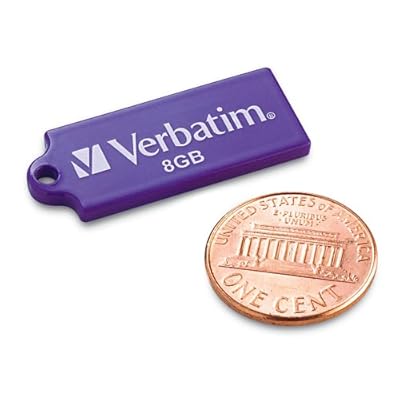
I bought this unbelievably tiny Verbatim "Tuff n Tiny" flash drive.
"How clever I am," I thought to myself, "I'll just leave it on my keys all the time."
Everyone who saw me using it was amazed.  "How'd they make it so small?"
That worked all semester as I slaved over* my graduate school work.
Then I went to retrieve my files the other day.
The drive won't recognize in any computer.
The on-campus computer support folks say they can't help me.

See you in the CAD lab, re-drafting a semester's worth of work.

Thanks, Verbatim, for the reminder to always store important files on the cloud.


* Might could be exaggerating slightly

Spilling the Beans

This is part of a very occasional series of ruminative posts in which I explore the career of a twenty-something student as he explores career options in a world with heaps of possibilities.


Lately I've been thinking about how businesses use the Web strategically.
For example, Chris Kulczycki, proprietor of Velo Orange (and friend of the blog), uses his company's blog to not only provide updates on new products, but to engage publicly with customers about product design and even explore new branding strategies.  On a recent trip to Taiwan to meet with manufacturers, Chris blogged and tweeted about new product possibilities and production challenges.
Arc-Zone has a slick web presence, which includes their main e-commerce site as well as two blogs, Carmen Electrode and Joe Welder.  Written by Arc-Zone's marketing director, Carmen Electrode focuses on women in welding, and in fact may be the only blog on that subject.  Carmen herself has a facebook profile.  Besides a Twitter feed, Arc-Zone also has a YouTube channel.  In one YouTube video, the company founder gives a tour of their facility, including enough detail to make a competitor salivate.
These are just two examples.  I'm sure there are dozens more like them.
Traditional business logic would frown on all of this.  These companies would seem to be giving away the very things that keep them competitive.  Every tidbit tweeted could put a competitor one step closer to undercutting them.
And yet, the sky--it does not fall.  These businesses are not in decline.  Competitors aren't appearing daily.
"Why?" is a subject for another day, but, as a consumer, I feel an attachment to these companies.  I understand a little better what drives them, where they're going.  I want to do business with them because I can see how they work, their attention to quality & detail.  Managing a complex web presence is challenging and time-consuming.  A company with a serious commitment to that is doing something right.

With that in mind, let's talk about me.
This summer was a great one.
For about a month, I did contract work for two companies.  At one I did 3D CAD, designing parts in a quiet office, and learned a lot about engineering a complex pneumatic/hydraulic/electrical system.  At the other I helped build a prototype mountain bike frame in a busy fabrication shop, working alongside welders and machinists.  My main contact at each company was a late 30s/early 40s business owner--energetic, passionate, talented, fathers.  Two different guys, but they both needed things made, new things, unlike what they'd made previously.
For the first time, I felt like my clients really valued my skill set.  My clients made me think about who I want to be when I'm their age.
I also spent a month as a volunteer in Guatemala, doing similar work, but in a very different setting, and with a focus specifically on sustainable technologies for the rural poor.  I worked on micro-hydroelectric installations, made a sheet metal flue for a brick oven, and troubleshooted solar thermal domestic hot water collectors.

What if this is me: the guy who helps people prototype.  I do 3D CAD, do the stress/strain analysis, make shop drawings.  I have a broad range of fabrication skills.  I specialize in metals, but beyond that I'm fairly niche-less: machining, welding, brazing, cutting, CNC, steels, aluminum, pipe, tube, plate, square, round, thick, thin.  I could even specialize in unusual processes, like dissimilar metal joining.  I provide the perspective of a fabricator in the design-for-manufacture process, while remaining fluent in the language of design.  I'm the bridge between manufacturing and design, because I have experience with both.  When time comes to mass-produce something, I can offer contacts in manufacturing and help work out the details.

Questions for discussion:
- What is the client base?  Entrepreneurs?  Artists? Companies wanting to develop a new product?  What about academia--grant-funded researchers?
- To what degree should I specialize in renewable energy, or anything else for that matter?  This may evolve as the business grows.
- What contacts do I need?  Who would be the best people to know?  What contacts do I need in manufacturing specifically?  Does this mean expanding my network towards China, Taiwan, Japan, Germany?
- How do you market a business like this?  What kind of image/brand do I want to portray? What kind of web presence would be best?
- Does the list of services include fabrication?   Do I need my own shop space?  This could be the most expensive start-up cost, including tools, space, utility bills, insurance.  High fixed costs, even if it goes unused.  A shop is expensive to move, and ties up capital in a form (machinery) that's not easily liquidated.  Slowly acquiring more tools on a job-by-job basis seems prudent for now.
- Where would be the ideal location?  How much travel would be involved?
- What key employees or partners do I bring on board?  Who takes care of the things I'm not good at?
- Who else is doing work like this?  What can I learn from them?

Name/slogan/branding ideas:
Business-savvy design/fabrication consulting
Prototypes that work
Technology Consulting
FAB Design
Prototypes, Inc.
Proto Design
Technology Design

Wait, Detroit is Cool?

The city that once reigned as the locus of brute American manufacturing strength has been in collapse for decades.  Yet now, in its deepest decline, Detroit is once again ripe for a new kind of development, as Urbanophile explains in an exceptional piece of internet journalism.  What kind of craft revival could emerge from the recession-wrought wreckage of Motown?
Hat tip to Galen Pierce-Gardner and Sistah Sarah.

dream house, rough draft

One of our first Big Graduate School Projects is a residential design for Sustainable Building Design & Construction.  We're supposed to incorporate everything we know about sustainable building into a house.

To make things more exciting I decided to design something I'd actually want to live in...when I win the lottery.

I learned Autodesk Revit 2010 for this project.  It's a lot like Inventor, but this house still took a full day to draw this up, with plenty of help from my classmate Mike Hairston, and the model is rough.

Three bathrooms are clustered on the north side to accommodate a composting toilet system.
Of course there's greywater treatment, composting, rainwater catchment, maybe even a biogas digester to make methane from animal wastes.

Most exterior walls would be 6.5" polyurethane SIPs, R-40.  Probably a SIP roof too.


From SE.  Exterior glass is concentrated on the south wall, where it does the most good for passive solar heating.
The floor of the 2nd level is polished concrete, which has pretty good thermal mass properties.  Not as good as water, but water is so much harder to walk on.  Unless you're in the bible.  But then you'd have bigger problems, like locusts.  And whales.


Um, anyway, we're restricted to 1600 sq. ft. of living space...but there's no limit on shop space...so I added a 1600 sq. ft. shop in the basement.


The three bay doors would be these, R-value 17.5, with windows along the top for daylighting, and taller than shown here.
The shop is wired for a nice TIG rig.  220 volts on 30 amp breakers at least.
I'm leaning towards a rammed-earth shop floor on top of a concrete slab.  From what I've heard, earthen floors are really comfortable.  My feet hate concrete floors.
A separate ventilation system removes fumes and dust, preventing any nasties from mixing with the air in the living area.  LEED is really particular about indoor air quality.


East elevation.  The north side is set into a modest hill, so the upstairs door and the shop bay doors are all on grade.


South elevation.

From SW, showing master bedroom.  I haven't figured out the interior walls yet.

From SE.

Brazing Copper to Steel with Gasflux C-04 Nickel Bronze

While researching something else the other day, I came across a few people wondering how to join copper and steel.  I had to do this once and had great success using this method, so much so that I've used it a few times since.

--

I use Gasflux C-04 nickel bronze in 3/32" diameter, along with their Type B blue paste flux. These should be available through Airgas on the East Coast. Low-fuming bronze from the local welding store is not at all the same thing.

Copper, being much more thermally conductive than steel, quickly sucks heat away from the joint. So if the copper you're brazing is connected to more copper, be prepared to heat up the whole mess, which can take a lot of heat.

Conversely, steel is slow to disperse heat, so you may want to preheat the steel to avoid overheating the copper, especially if there's a lot of steel and not so much copper. By the time the steel comes up to temp, the copper may be hot enough to flow brazing filler, just from being around the steel.

All that said, this is not a very hard joint to braze. If you've done blacksmithing or basic MIG or stick welding, this would be a lot easier to learn than TIG.  A quick practice joint or two would suffice for training.

There are other ways to join copper and steel, like silver soldering, but this method may create a stronger joint than silver, especially in a tee or butt joint. Bronze fillers (like C-04) are better for filling gaps than silver fillers.

This method works especially well for brazing copper tube passing through a hole in sheet steel. The hole need not have a perfect clearance fit around the pipe, and the tube need not be perfectly centered in the hole.

As in all brazing operations, freshly-sanded, clean, oil-free parent metals are highly recommended.

If the copper gets too hot, it'll open up a hole, which would likely mean replacing the copper, so watch out for that.

Discoloration of the copper is normal and can be easily removed with abrasives like Scotch-Brite and emery roll.

Copper anneals at temperatures well below brazing temperatures.  Be prepared for the copper to soften considerably.

I've always used oxy-acetylene, but oxy-propane would surely work.

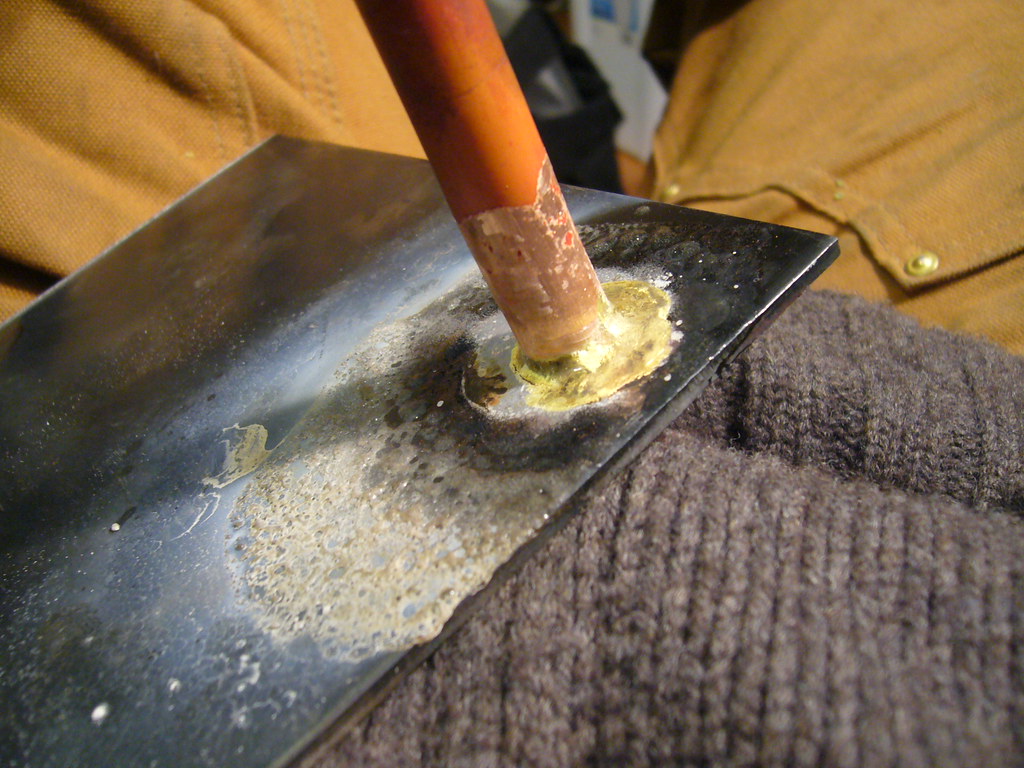
UPDATE: Here's an example.

Not my absolute best work, but good enough.  Flux was applied to the steel only in a small circle, hence the black oxidation everywhere.