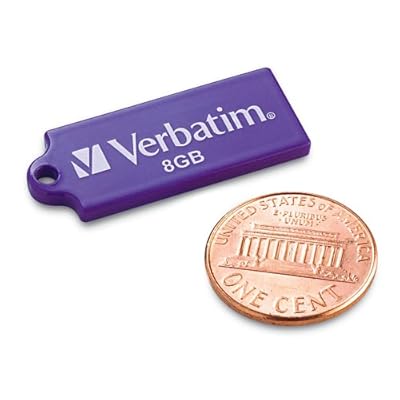
I bought this unbelievably tiny Verbatim "Tuff n Tiny" flash drive.
"How clever I am," I thought to myself, "I'll just leave it on my keys all the time."
Everyone who saw me using it was amazed. "How'd they make it so small?"
That worked all semester as I slaved over* my graduate school work.
Then I went to retrieve my files the other day.
The drive won't recognize in any computer.
The on-campus computer support folks say they can't help me.
See you in the CAD lab, re-drafting a semester's worth of work.
Thanks, Verbatim, for the reminder to always store important files on the cloud.
* Might could be exaggerating slightly
Showing posts with label school. Show all posts
Don't Panic.
I arrived in the mountain town of Boone, North Carolina, five days ago, my little red pickup Baby loaded down with everything I'd need to start a new Official Graduate Student life here.
Then the kick-ass housing situation I'd been counting on fell through.
Don't panic. Meet grad students, sleep on their couches, join couchsurfing.org, buy beer for your hospitable hosts. When the couches run out, decide to go camping at the last minute. Keep looking for the right place to live. DON'T PANIC.
--
Yesterday I was in class with a lot of uncertainties. We're writing a proposal for my university to compete in a Big Important Prestigious-As-Hell Competition. The rulebook is an inch thick. We have almost no idea how we're going to get the proposal done in time.
As I am wont to do, I kept raising problems I could foresee. How are we gonna transport this thing a thousand miles without damaging it? How much of the fabrication will we do in-house? Finally one of the profs said something to the effect of, "Don't panic about that. We'll figure that out."
--
I realized that every job is subject to these tensions. Do we make it ourselves or outsource it? What tolerance can we get away with here? Do we build it to last for generations, or just to last long enough?
Some part of me has been hoping that these issues would disappear one day. That eventually budget would cease to be a concern, so I could stop worrying about how much things would cost and just focus on how it's made.
But these things never go away. Everything costs something. The job is to deal with these factors, these tensions, without panicking.
Rethinking Occupational Taxonomies
Back when I wanted to be an aerospace engineer, I did some research and came away with the following understanding of how things worked:
1. Scientists do the theoretical stuff.
2. Engineers design stuff, solve problems, and apply the scientists' theory.
3. Technicians install/build/make what the engineers designed.
A semester of engineering school made it abundantly clear I was not destined to be an engineer. So I've been trying to decide ever since...Where do I fit in this hierarchy?
Now I have realized some key truths:
1. Engineers, bless their hearts, often lack on-the-shop-floor experience, which can cause problems in the design process.
2. There are actually more than three positions in that 1-2-3 hierarchy.
3. Especially under sub-optimal conditions, the lines between Engineer and Technician are often blurred.
4. People who are good at their thing often have a lot of knowledge that overlaps with the areas around them--e.g. good engineers know a lot about technicians' jobs.
College Visit: Appalachian State University
I am in Boone, North Carolina, today to visit Appalachian State University, and particularly their Appropriate Technology department.
I'm scheduled to visit a renewable energy class, meet with the professor afterward, then meet with an admissions person.
In the afternoon I'm headed to Raleigh for a visit with Andrew Stewart from the [Frame] list. Photos to come.
Having done a few of these college visits as a prospective transfer student (RISD, VCU, John Tyler Community College, Hampshire), some guidelines have emerged:
- Ignore the official tour and information session. These tend to be filled with general info on the whole school (easily found elsewhere), and are usually geared toward high schoolers and their parents. They also consume valuable time that could be spent getting a more hands-on look.
- Get a map of campus ahead of time. Figure out the basic lay of the land so you know how to wander around. Find the dining hall, admissions, the student commons, the relevant academic buildings, and whatever else interests you.
- Spend your time with professors and students. These are the people you'll potentially be working with. They know the real deal, and they'll tell you, if you play your cards right.
- Set up a meeting with at least one important professor. Sit in on an interesting class if possible. Do this with plenty of advance notice.
- Get a good look at the facilities and the shops. These say a lot about the priorities of the school, the department, and the professors.
- As my sister says, the most important question is: "What are your graduates doing now?".
- Eat at a place you'd likely eat at as a student. Ditto coffee and beer.
- Buy a t-shirt. And a postcard.
- Send thank-you notes to the people who helped you. Better yet, send them something small that they seem to need.
- Come across as eager, enthusiastic, driven, and all that, but don't over-do it. Make an impression. Be memorable. This isn't hard--not many prospective students do this kind of visit. I am finding that 90% of success in academia (anything?) is due to good name recognition (a.k.a. networking).
- Even if this school won't work out, you can still learn a lot during your visit. These professors probably know their counterparts elsewhere. They definitely know the big names in their field. And they probably like helping enthusiastic students.
Hampshire College and a Maasai Rap Video
Earlier this spring I spent a day visiting Hampshire College (wiki), a small liberal arts college in Amherst, MA.
Hampshire is an interesting place, because every student designs their own degree program. There are foundation courses in the first year, then two years of study in an area of the student's choosing. Finally, in the third year, the student completes a big self-directed project, somewhat like a graduate thesis. Also, there's no grades, just student evaluations.
Yes, they do play a lot of frisbee.
But the most interesting thing there is the Lemelson Center for Design, part of their School for Interdisciplinary Arts. The Center is funded mostly by grants from the Lemelson Foundation, named for prolific inventor Jerome Lemelson.
The Center has great facilities, especially for metalworking, and especially for framebuilding and other bike-related work. The shop is unusually clean and well-organized, with lots of funky, shop-made tools. They have an Anvil Journeyman frame jig as well as a full set of reaming/tapping/facing tools. A course on bike frame construction is taught every fall. They are especially geared toward technological solutions for disabled people. Here's some student projects:


--
While observing the "Appropriate Technology in the Developing World" class, I saw some students brass brazing a bike cart based on the Community Bike Cart Design plans (by Aaron Wieler, a Hampshire grad). They were using Harris black flux, which actually seemed to work OK despite the high temperature, although I would've preferred Gasflux Type B blue flux.
So after returning to Richmond, I sent a few sticks of Gasflux C-04 and a little bottle of blue flux up to Hampshire. Today I got this email from the Appropriate Tech professor:
But it also made my day to have helped the folks at the Lemelson Center.
--
The Lemelson Foundation also recently awarded a grant to KickStart, a non-profit that developed the MoneyMaker--a simple, affordable, effective pump for small-scale crop irrigation.
The MoneyMaker pumps were the focus of a fantastic 2002 Wired article, back when KickStart was called ApproTEC. That article made a big impact on your then-17-year-old narrator, because it was about practical ingenuity applied to problems in the developing world, and that kind of thing gets me all giddy.
But wait. It gets so much better. There now exists a rap video about the MoneyMaker (the pump, not a butt) by a Maasai rap artist named Mr. Ebbo, seen here very excited about something...possibly an irrigation pump:

--
The importance of a place like the Lemelson Center cannot be overemphasized.
It offers an entirely unique form of education. It breaks down traditional barriers between education in the arts, the business world, and the fab shop. Traditional educational structures tend to stifle this interdisciplinary learning, especially at the large universities that award most degrees (like mine).
It cultivates inventiveness. Moreover, it focuses inventive energy on the problems of groups that traditionally go overlooked: the disabled and the developing world.
From a business perspective, these markets may go untapped because at first the numbers look all wrong: the R&D and manufacturing costs appear too high relative to the size of the market. But the Lemelson Center can provide a vibrant think tank where good ideas can develop into marketable designs, and the Foundation can provide seed capital to get these designs distributed to the folks who need them, via a non-profit like KickStart. There are hundreds of similar problems waiting to be solved with a solution like the MoneyMaker.
This is one blogger who would hate to see a place as valuable as Lemelson disappear, even if I never study or work there.
Hampshire is an interesting place, because every student designs their own degree program. There are foundation courses in the first year, then two years of study in an area of the student's choosing. Finally, in the third year, the student completes a big self-directed project, somewhat like a graduate thesis. Also, there's no grades, just student evaluations.
Yes, they do play a lot of frisbee.
But the most interesting thing there is the Lemelson Center for Design, part of their School for Interdisciplinary Arts. The Center is funded mostly by grants from the Lemelson Foundation, named for prolific inventor Jerome Lemelson.
The Center has great facilities, especially for metalworking, and especially for framebuilding and other bike-related work. The shop is unusually clean and well-organized, with lots of funky, shop-made tools. They have an Anvil Journeyman frame jig as well as a full set of reaming/tapping/facing tools. A course on bike frame construction is taught every fall. They are especially geared toward technological solutions for disabled people. Here's some student projects:
--
While observing the "Appropriate Technology in the Developing World" class, I saw some students brass brazing a bike cart based on the Community Bike Cart Design plans (by Aaron Wieler, a Hampshire grad). They were using Harris black flux, which actually seemed to work OK despite the high temperature, although I would've preferred Gasflux Type B blue flux.
So after returning to Richmond, I sent a few sticks of Gasflux C-04 and a little bottle of blue flux up to Hampshire. Today I got this email from the Appropriate Tech professor:
This morning I was searching online for a blue colored flux that I used several years ago and really liked. I couldn't find it. So it was really strange when I found your package outside my door several moments later, with a sample of blue flux, and instructions on where it was from. Are you a metal shop elf dressed up as a regular seeming guy?The big story here is that I managed to seem like a regular guy.
But it also made my day to have helped the folks at the Lemelson Center.
--
The Lemelson Foundation also recently awarded a grant to KickStart, a non-profit that developed the MoneyMaker--a simple, affordable, effective pump for small-scale crop irrigation.
The MoneyMaker pumps were the focus of a fantastic 2002 Wired article, back when KickStart was called ApproTEC. That article made a big impact on your then-17-year-old narrator, because it was about practical ingenuity applied to problems in the developing world, and that kind of thing gets me all giddy.
But wait. It gets so much better. There now exists a rap video about the MoneyMaker (the pump, not a butt) by a Maasai rap artist named Mr. Ebbo, seen here very excited about something...possibly an irrigation pump:
--
The importance of a place like the Lemelson Center cannot be overemphasized.
It offers an entirely unique form of education. It breaks down traditional barriers between education in the arts, the business world, and the fab shop. Traditional educational structures tend to stifle this interdisciplinary learning, especially at the large universities that award most degrees (like mine).
It cultivates inventiveness. Moreover, it focuses inventive energy on the problems of groups that traditionally go overlooked: the disabled and the developing world.
From a business perspective, these markets may go untapped because at first the numbers look all wrong: the R&D and manufacturing costs appear too high relative to the size of the market. But the Lemelson Center can provide a vibrant think tank where good ideas can develop into marketable designs, and the Foundation can provide seed capital to get these designs distributed to the folks who need them, via a non-profit like KickStart. There are hundreds of similar problems waiting to be solved with a solution like the MoneyMaker.
This is one blogger who would hate to see a place as valuable as Lemelson disappear, even if I never study or work there.
Thankful, or: Diamond in the Back, Sunroof Top, Diggin' the Scene
I recently moved to Richmond, VA from the DC suburbs to pursue an interdisciplinary degree at Virginia Commonwealth University, combining studies in their Craft and Business schools as well as in the Precision Machining program at John Tyler Community College in nearby Chester.
Today has been interesting. It's the day before VCU classes start, so more errand-running in preparation for the semester.
Last night I discovered the rear hub on my bike was locked up, and fixing that is one of those repairs I can't do at home. So I set out today looking for a shop; the first was closed, so I tried a newish-looking one in Carytown. Turned out to be a very cool, relaxed shop, similar to one that just opened in DC that my buddy works at.
I got the hub temporarily fixed up, ordered new bearings for it, slapped on a new cog for lower gearing, and placed an order for a red-and-white Chrome Citizen to replace my aging Timbuk2. I hope it'll be very visible and sufficiently color-coordinated with existing cycling apparel.
As I was about to leave, I asked about the unpainted fork they had mounted in a cool velvet-lined box frame. That led to some framebuilding talk with one of the sales people. Turns out he's a recent VCU Craft grad, he built a lugged frame in the Craft shop, and we know some of the same people in the framebuilding universe. He's interested in doing custom bike part manufacture, but lacks access to suitable machine tools, as well as technical know-how to run the machines. Funny, I say, because I have (or will soon have) access to such tools and know-how to use them, but I lack sweet designs and ideas. Each of us realized pretty quickly we needed to stay in touch with the other. Fortunately, I'll be back to pick up my new bag in a week.
Did 45 minutes at one of VCU's two gyms, which are as nice as any I've been in (though that's not saying much, I'm new to the gym thing).
Wandered around later near the gym and art school, stopped into Pibby's, a tiny one-room bike shop that I'd bought parts from at a swap meet in Maryland earlier this year. The guy (the sole proprietor) gave me some valuable names and numbers: the guy I'd met earlier in the day in Carytown, a semi-local framebuilder, a powdercoater down the street. Just because I seemed like I might benefit from the info, I guess.
Drove to Chester, bought cheap gas and the rest of my John Tyler books. Class tonight was all shop safety, pretty boring, though by now we've started to loosen up and crack more jokes.
Then I went to the Lowe's (I know, I know) across the street from JT to get some carpet. I want to convert half of the spare room in my new apt. into a bike shop, but I need to protect the hardwood floor from the grease and stand and bikes. I picked out some perfectly grease-colored, dirt-cheap stuff and went to find a guy to cut it for me. Turns out he's a retired advertising photographer and used to be an avid cyclist. And he's got a machinist buddy with a shop way out in Oilville who's looking for shop help. He comps me a couple feet of carpet and gives me his buddy's numbers. At a Lowe's?!
Driving home tonight I was reflecting on the day and on how thankful I am:
• To live in this exciting new city, where people are interested in making things in the same way I am, and where there's resources available for folks like us.
• To not have to pay tuition out-of-pocket, or have it paid by my employer, as my classmates at John Tyler do, and to be able to go to school far from home.
• To have access to these new textbooks, which, while maybe not enthralling, will answer a lot of the most basic questions I'd had on my mind.
• To have free, convenient access to the best-equipped gym I've ever used.
• To live in this great new house, where I have room for a dedicated bike work space, and to be able to furnish it with carpet and tools and parts.
Subscribe to:
Posts (Atom)